"We are aware of more than 100 people hospitalized and at least 10 deaths associated with compounded semaglutide."Lars Fruergaard Jørgensen, CEO, Novo Nordisk -- CNN, November 2024
Deaths, hospitalizations, overdoses, and contamination events linked to compounded and gray-market GLP-1 products. These are not theoretical risks. They are documented outcomes.
"We are aware of more than 100 people hospitalized and at least 10 deaths associated with compounded semaglutide."Lars Fruergaard Jørgensen, CEO, Novo Nordisk -- CNN, November 2024
In 2024, the FDA issued a safety alert after identifying a pattern of patients self-injecting 5 to 20 times their intended dose of compounded semaglutide. The root cause: confusion between milligrams, milliliters, and units.
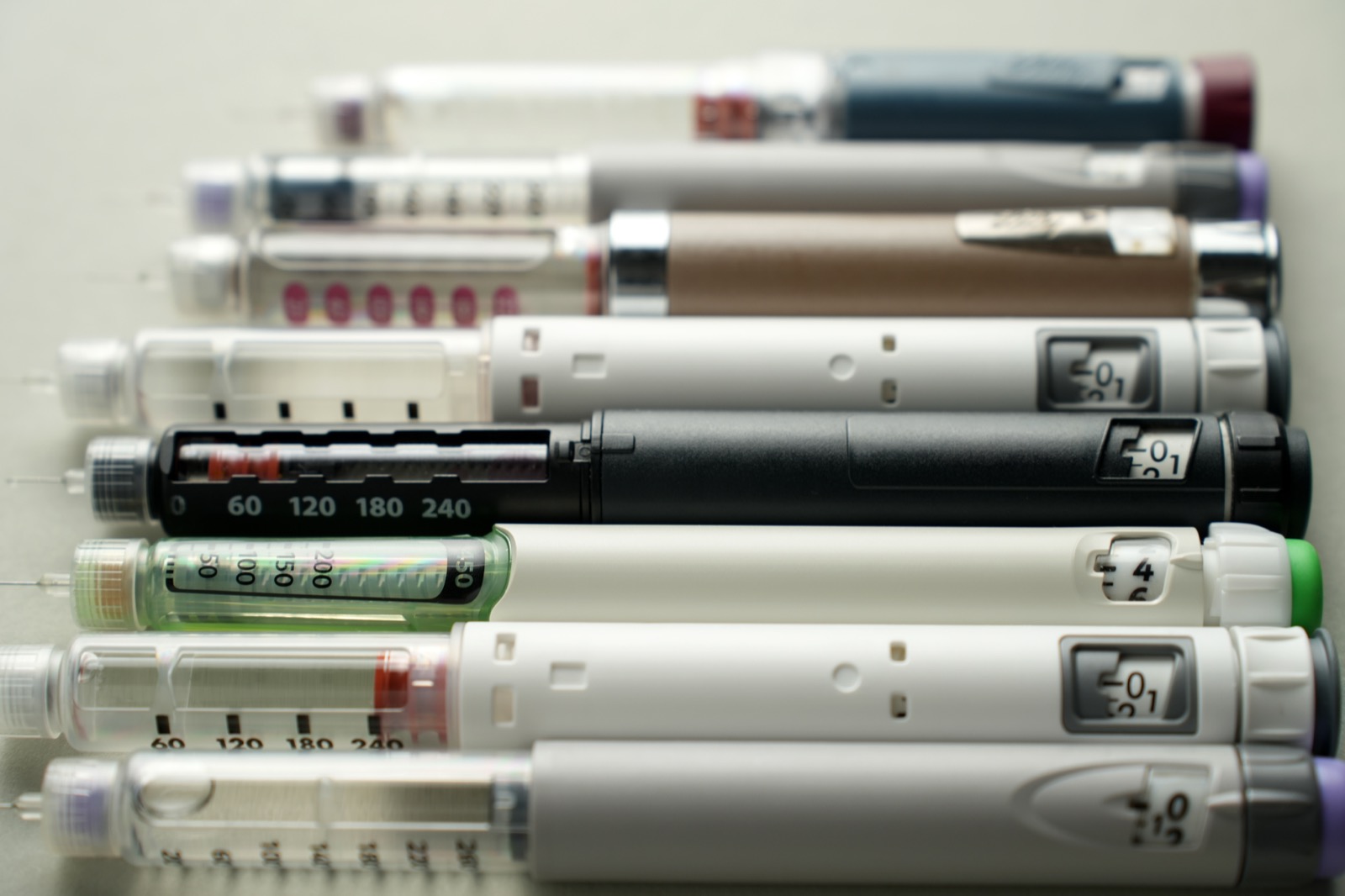
FDA-approved Ozempic and Wegovy use pre-filled pens with fixed doses -- the patient clicks, injects, done. Compounded semaglutide comes in multi-dose vials requiring the patient to calculate and draw the correct volume using an insulin syringe. Vials are labeled in mg/mL. Syringes are marked in units. The conversion is not intuitive, and prescribers frequently fail to provide clear dosing instructions. A patient prescribed 0.25mg who draws 0.25mL from a 5mg/mL vial has just injected 1.25mg -- five times the intended dose.
This is not user error. It is a systems failure. The compounding model takes a drug designed for foolproof delivery and repackages it into a format that requires pharmaceutical math from patients who have no training in pharmaceutical math.

FDA inspectors documented flying insects inside the sterile compounding area at ProRx LLC. The facility recalled more than 36,000 vials of compounded injectables. Patients who had already injected product from these vials were not reached.
Shipped semaglutide at 79.9% of labeled potency. In a separate incident, distributed tirzepatide that had failed sterility testing. Neither event triggered patient notification. Product that failed sterility -- meaning it may have contained live bacteria -- was injected by patients who were never informed.
Counterfeit Ozempic pens entered the US supply chain containing insulin glargine rather than semaglutide. Three patients were hospitalized for hypoglycemia. Insulin glargine causes rapid, dangerous drops in blood sugar that can lead to seizures, coma, and death -- a risk that does not exist with semaglutide.
Physician Matthew Lewis prescribed and sold compounded semaglutide through his practice, receiving $249,000 via Venmo transactions disguised as "Meal Prep" payments. He entered a guilty plea. His patients received compounded product with no pharmacist oversight, no sterility verification, and no adverse event reporting.
A study published in JAMA Ophthalmology identified a statistically significant association between GLP-1 agonist use and non-arteritic anterior ischemic optic neuropathy (NAION) -- a form of sudden vision loss caused by reduced blood flow to the optic nerve.
This signal applies to all semaglutide use, including FDA-approved products. It is included here because gray-market users often lack the physician monitoring that would flag early visual symptoms. NAION causes permanent vision loss. There is no treatment. Early detection is the only mitigation, and it requires the kind of regular clinical follow-up that self-administered gray-market protocols typically omit.
Harm data on this page is sourced from FDA adverse event databases, manufacturer disclosures, poison control center reports, federal enforcement records, and peer-reviewed ophthalmology research. Key sources:
FAERS reports are voluntarily submitted and do not establish causation. Death and hospitalization counts represent minimum confirmed figures. Actual numbers are likely higher due to underreporting.