A standard third-party peptide test answers one question well: is this the right molecule in roughly the right amount? It says nothing about whether the product is safe to inject. Here is exactly what is covered, what is missed, and why the gap matters.
Confirms the molecule matches the reference standard. The sample contains semaglutide, not a different peptide.
Measures how much active peptide is present compared to what the label claims. A 5mg vial might contain 4.2mg or 6.1mg.
Reports the percentage of the sample that is the target peptide vs. other peaks on the chromatogram. A rough indicator of contamination.
Requires a separate LAL (Limulus Amebocyte Lysate) test, ~$170 additional. Endotoxins cause fever, sepsis, and organ failure. The JMIR study found them in 100% of gray-market samples.
No test for live bacteria, fungi, or yeast. A vial can pass HPLC purity at 98% and still contain viable microorganisms that cause injection-site infections or septicemia.
Requires ICP-MS (Inductively Coupled Plasma Mass Spectrometry). Lead, mercury, arsenic, and cadmium from manufacturing equipment or reagents are invisible to HPLC.
Requires GC-MS (Gas Chromatography-Mass Spectrometry). Solvents used in peptide synthesis -- DMF, DCM, TFA, acetonitrile -- are toxic at trace levels. HPLC does not detect them.
HPLC confirms the molecule has the right retention time. It cannot verify that every amino acid in the 31-residue (semaglutide) or 39-residue (tirzepatide) chain is correct. Novo Nordisk found amino acid additions and deletions in compounded samples -- errors invisible to HPLC.
Amino acids exist in mirror-image forms: L (natural) and D (unnatural). Standard HPLC cannot distinguish them. D-amino acid substitutions produce peptides that may be biologically inactive or immunogenic.
Peptides degrade during storage -- oxidation, deamidation, aggregation. Some degradation products co-elute with the parent peptide on HPLC, inflating the apparent purity number. Only advanced forced-degradation studies with validated methods can distinguish intact peptide from its breakdown products.
A CoA proves ONE vial was tested. It says nothing about the other 999 vials from that batch. The sample you tested isn't necessarily the sample you injected.
FDA-approved medications are tested for all seven of these factors before they reach you. Gray-market vials are tested for three — if you're lucky.
Find Care →
Janoshik Analytical -- the lab most widely used for gray-market peptide testing -- does not hold ISO 17025 accreditation. This is the international standard for testing and calibration laboratories. It requires documented procedures, instrument calibration traceability, proficiency testing, and external audits.
Without ISO 17025, there is no independent verification that the lab's methods are validated, that their instruments are calibrated, that their reference standards are current, or that their results are reproducible. The test result is only as good as the lab producing it, and there is no external body confirming the lab meets any standard.
Regular external audits, method validation documentation, instrument calibration traceability to national standards, staff competency assessments, proficiency testing against other labs, and a quality management system. FDA-registered laboratories and USP reference standard labs all hold this accreditation. Janoshik does not.
Even if a Janoshik test returns 99% purity, it tells you about the sample that was tested. It cannot verify that sample came from the same batch, vial, or production run as the product you received.
Vendors can send their best batch for testing and ship inferior product to customers. There is no chain-of-custody protocol, no lot tracking, and no way for the end user to verify that the COA on the website corresponds to the liquid in their vial. Modern Peptides exploited this gap by distributing entirely forged Janoshik COAs -- documents the lab confirmed it never produced.
A common misconception in the peptide community is that sterile filtering through a 0.22μm syringe filter makes a product safe. These filters remove bacteria. They do not remove endotoxins (which are molecular-scale, ~10 kDa) or prions. A filtered product can be bacteriologically sterile and still lethally pyrogenic.
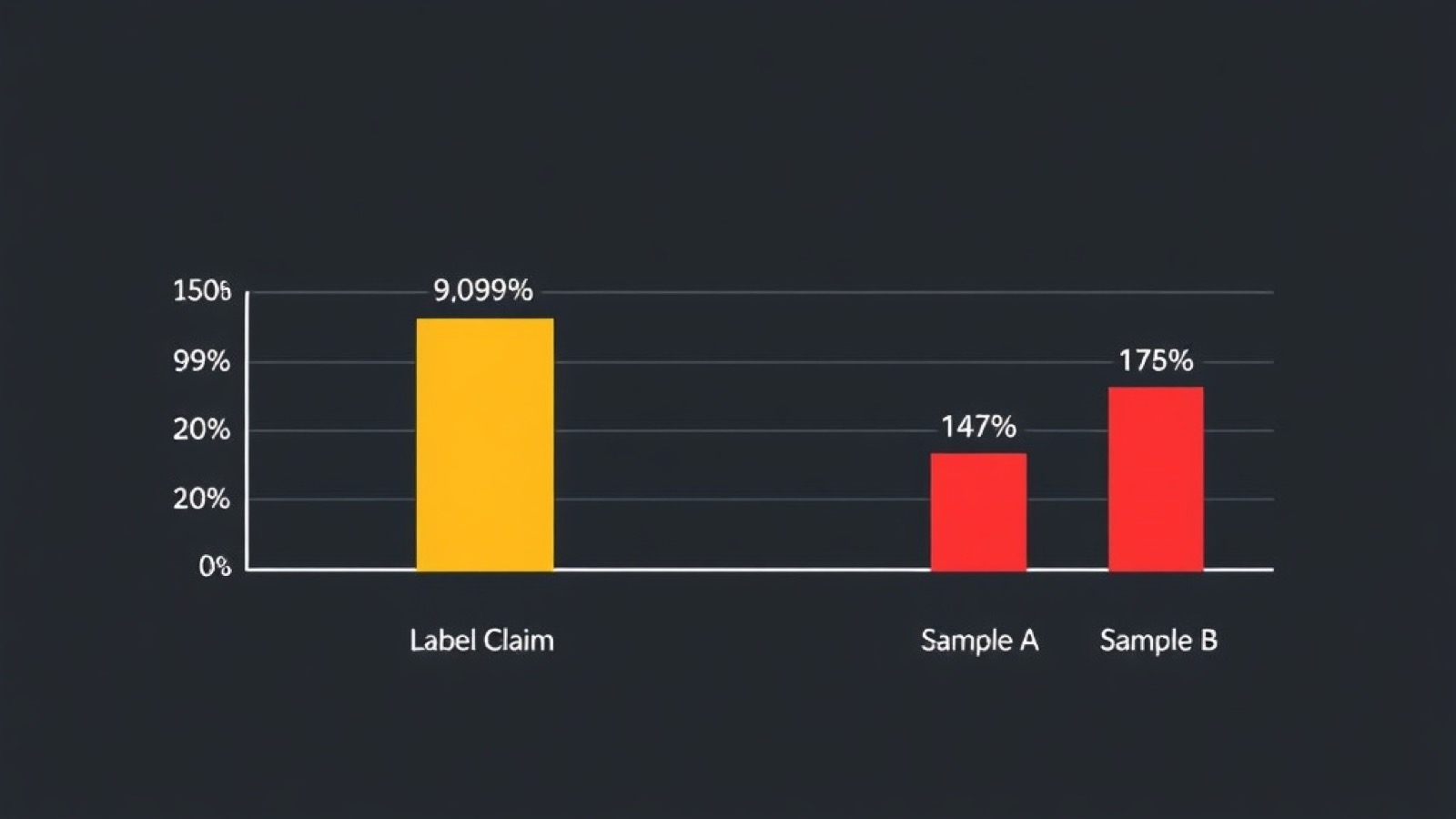
Here is the most damning data point: even limiting the assessment to the narrow criteria that standard testing does cover -- identity, quantity, and basic purity -- 43% of all peptides submitted to Janoshik in 2024 failed their own label claims.
This is a failure rate measured against the easiest bar to clear. These products failed on the one thing vendors know will be tested. The failure rate for the tests that are never run -- endotoxin, sterility, heavy metals, sequence verification -- is unknown, because nobody is measuring it.
Source: Janoshik Analytical, 2024 aggregate testing data. "Failed" = did not meet vendor's own label purity claim.
"Vendor CoAs are as good as toilet paper."Stairway to Gray (STG), community harm-reduction guide -- written by gray-market users for gray-market users

When the community's own harm-reduction resource -- written by experienced users who are sympathetic to the gray market -- tells its readers that vendor-provided Certificates of Analysis are worthless, the credibility of vendor testing claims is settled.
Go deeper: Forged COAs, fabricated lab results, and 8 documented fraud cases. Our full investigation into the testing ecosystem the gray market relies on.
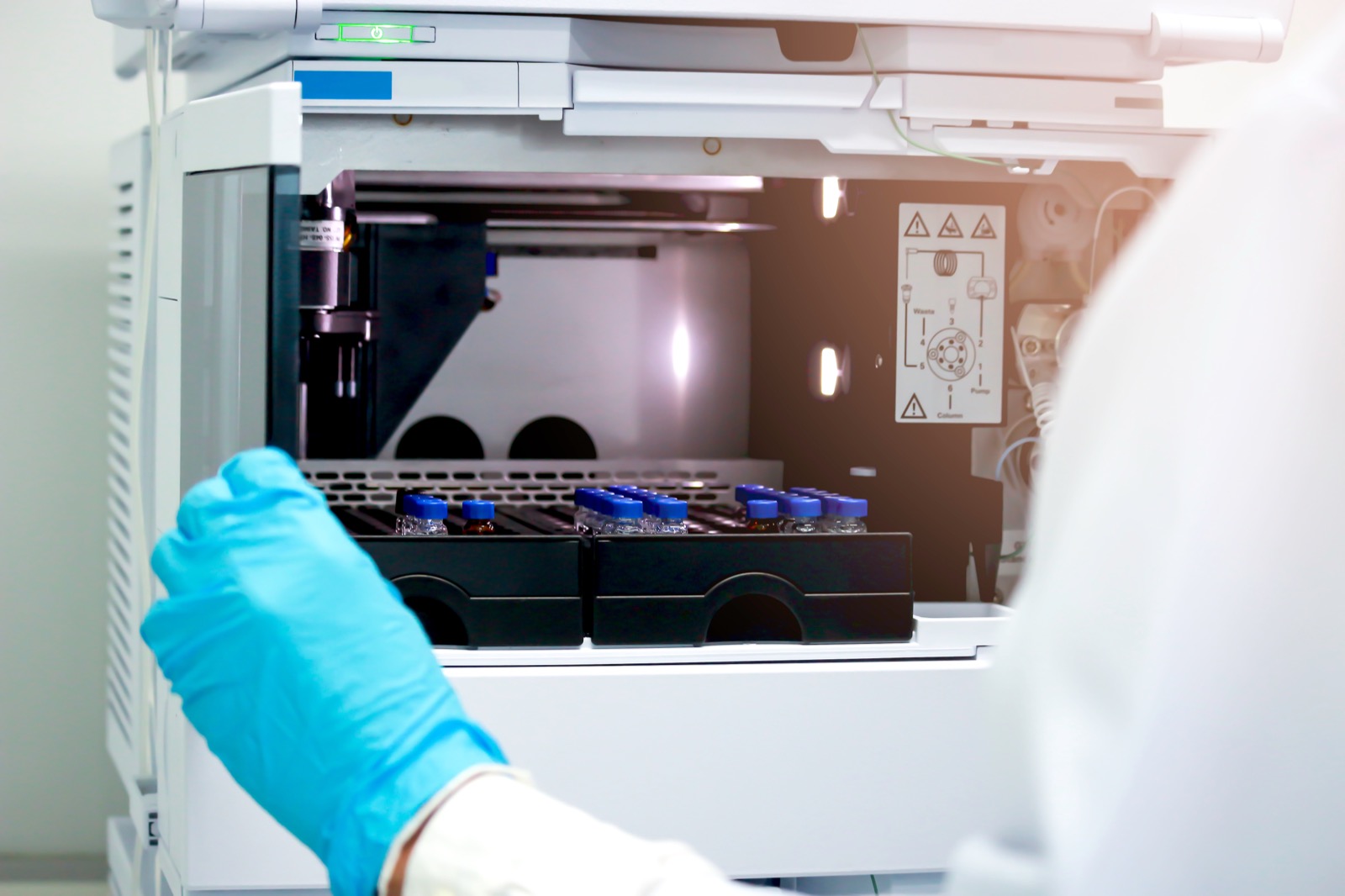
Read: Fake COAs →High-Performance Liquid Chromatography (HPLC) separates a sample into its component molecules by pushing it through a packed column under high pressure. Different molecules move through the column at different speeds based on their size, charge, and chemical properties.
A detector at the end records a chromatogram -- a graph of signal intensity over time. Each peak represents a different compound. The target peptide's peak is identified by comparing its retention time to a reference standard. Purity is calculated as the target peak's area divided by total peak area.
This is a powerful analytical technique. But it measures one dimension of a complex problem. Two molecules with identical retention times are indistinguishable. A degradation product that co-elutes with the parent peptide inflates apparent purity. And nothing about the chromatogram tells you whether the solution is sterile, endotoxin-free, or safe to inject.
This page describes the scope and limitations of standard third-party peptide testing based on published analytical methods, lab documentation, and expert review. Sources include:
Know Your Vial has no financial relationship with Janoshik Analytical, Finnrick Labs, or any testing service. We do not sell testing, peptides, or harm-reduction products.
43% of peptides tested by Janoshik failed purity claims. Modern Peptides forged lab certificates entirely.
Independent lab testing reveals gray-market semaglutide as low as 7.7% actual purity despite 99% label claims.
Peptide Sciences, Amino Asylum, Paradigm Peptides -- the vendors the community trusted most are all gone.