What's Actually in the Vial

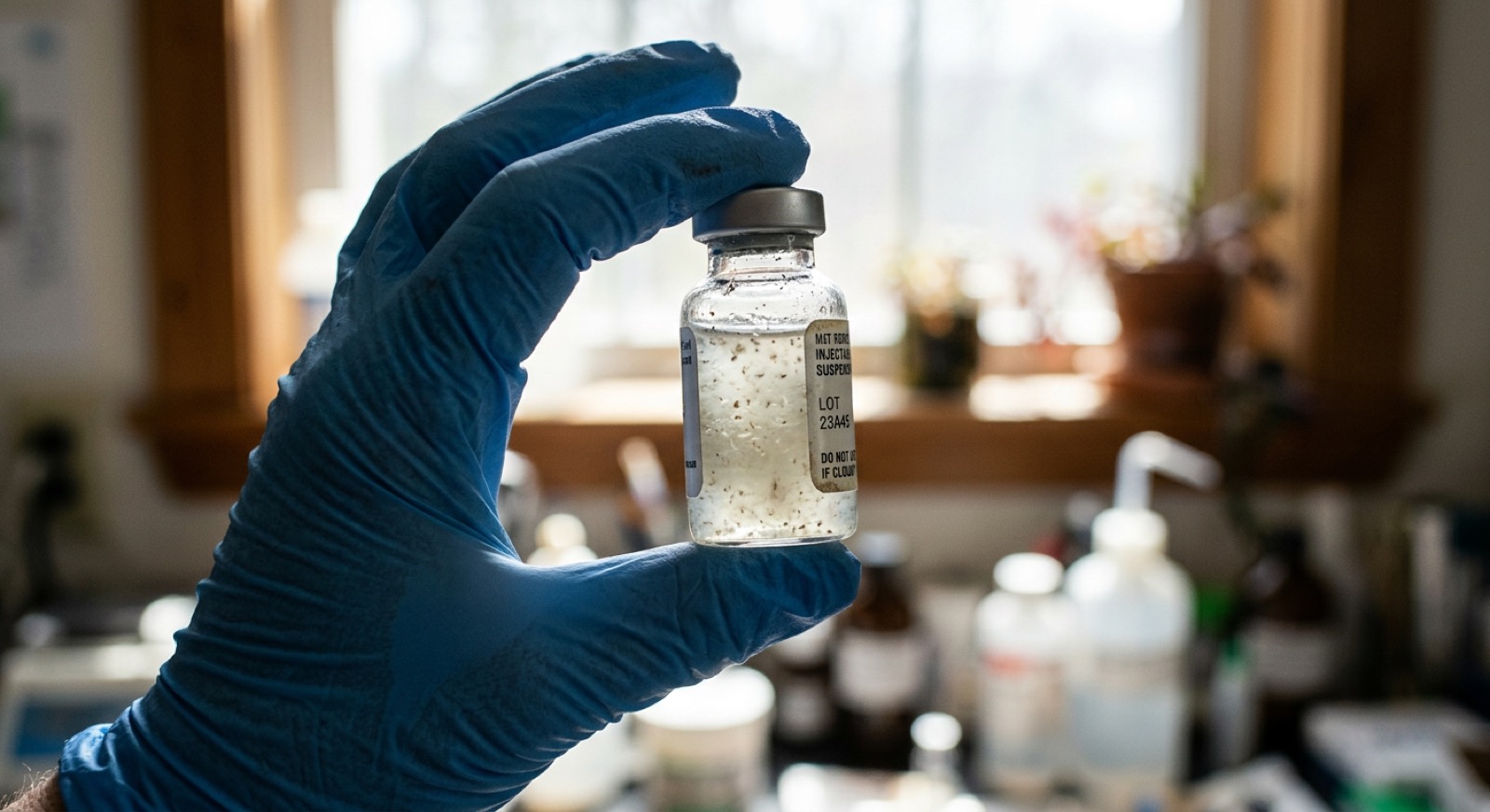
Independent lab testing tells a consistent story: gray-market GLP-1 peptides routinely fail purity claims by catastrophic margins. Labeled at 99%. Measured as low as 7.7%. Every sample contaminated.

JMIR Dermatology (2024) purchased semaglutide from online gray-market sellers and submitted samples for independent HPLC analysis. The results were not close.

FDA-Approved (Novo Nordisk)
99%
Gray-Market Label Claim
99%
Sample A (Highest)
14.37%
Sample B (Lowest)
7.7%

Source: JMIR Dermatology, 2024. HPLC purity analysis of semaglutide purchased from online vendors.


100% Endotoxin Contamination

The same JMIR study tested all purchased samples for bacterial endotoxins -- the cell-wall fragments of gram-negative bacteria that trigger fever, sepsis, and organ failure when injected.

Every single sample tested positive for endotoxin contamination. One hundred percent. This is not a purity problem alone. It is a sterility failure at the most fundamental level.

Why Endotoxins Matter

Endotoxins are pyrogens -- they cause fever, inflammatory cascades, and septic shock even at microgram levels. They are not destroyed by autoclaving. They pass through standard 0.22μm sterile filters. Removing them requires dedicated depyrogenation steps that gray-market facilities rarely perform.


Novo Nordisk: Up to 86% Impurities

Novo Nordisk conducted independent testing of compounded semaglutide products obtained from US pharmacies. Their findings were submitted to the FDA and made public.

86%
Maximum impurity level found in compounded semaglutide samples
100%
Failure rate -- not a single compounded sample met pharmaceutical purity standards
1
Pharmacy whose product contained BPC-157, an unapproved research peptide

Amino acid analysis revealed additions and deletions in the peptide sequence -- the wrong amino acids in the wrong places. These are not inert errors. Missequenced peptides are immunogenic: the body recognizes them as foreign proteins and mounts an immune response, producing anti-drug antibodies that can neutralize both the compounded product and the FDA-approved medication.

BPC-157 Contamination

One pharmacy's semaglutide product contained BPC-157 (Body Protection Compound-157), a research peptide with no FDA approval for any indication. Patients injecting what they believed was semaglutide were unknowingly administering an unapproved substance with no established safety profile in humans.

The Salt Form Problem

Most compounding pharmacies use semaglutide sodium or tirzepatide sodium as their starting material. The FDA-approved drugs use semaglutide base and tirzepatide base. These are different molecules.

FDA Position

The FDA has stated explicitly that semaglutide sodium and tirzepatide sodium have "not been shown to be safe and effective" and that there is "no legal basis" for compounding them for human use. The salt forms alter the pharmacokinetic profile -- how the drug is absorbed, distributed, and eliminated -- in ways that have never been studied in clinical trials.

This is not a technicality. The salt form changes molecular weight, solubility, stability, and bioavailability. Every clinical trial that established the safety and efficacy of semaglutide and tirzepatide used the base form. The salt form is, from a regulatory and pharmacological perspective, a different drug entirely.


43% of All Peptides Fail Lab Testing

Janoshik Analytical, the most widely used third-party testing lab in the peptide community, published aggregate data from their 2024 testing volume. The numbers are unambiguous.

43%
Of all peptides tested by Janoshik in 2024 failed their own label purity claims
Janoshik Analytical, 2024 aggregate report
±46%
Quantity divergence from label found in Finnrick's 2,446 retatrutide samples
Finnrick Labs, 2024
Finnrick Retatrutide Study

Finnrick Labs tested 2,446 samples of retatrutide -- a next-generation GLP-1 agonist gaining rapid adoption in gray markets before any FDA approval. Their findings: quantity diverged up to ±46% from label claims, and 10% of samples failed sterility, purity, or dosing thresholds.

A ±46% dosing variance means a patient expecting 5mg could receive anywhere from 2.7mg to 7.3mg. At the high end, this exceeds the dose escalation protocols that clinical trials use to minimize gastrointestinal side effects. At the low end, the patient is undertreated and may conclude the medication does not work.

Specific Vendor Failures

Kennett Square, PA Facility

Shipped semaglutide at 79.9% labeled potency. Separately distributed tirzepatide that had failed sterility testing. In both cases, zero patient notification was issued. Patients injected sub-potent and potentially contaminated product without knowledge.

Coastal Peptides: Wrong Peptide Entirely

Sold vials labeled as semaglutide that actually contained cagrilintide -- a completely different peptide with different receptor binding, different pharmacokinetics, and different side effect profiles. Customers had no way to know without third-party testing.

Modern Peptides: Forged Lab Reports

Distributed Certificates of Analysis (COAs) bearing the Janoshik Analytical name and logo that Janoshik confirmed were fabricated. Customers who trusted the COA as proof of quality were relying on a forged document.

Counterfeit Ozempic: Insulin Glargine

Counterfeit Ozempic pens entered the US supply chain containing insulin glargine instead of semaglutide. Three patients were hospitalized for hypoglycemia -- dangerously low blood sugar caused by an insulin they did not know they were injecting.

Methodology & Sources

This page aggregates purity data from peer-reviewed research, FDA enforcement records, manufacturer testing reports, and independent analytical laboratories. Primary sources include:

  • JMIR Dermatology (2024) -- HPLC purity and endotoxin analysis of online semaglutide purchases
  • Novo Nordisk testing data submitted to FDA -- amino acid sequencing and impurity analysis of compounded semaglutide
  • FDA warning letters, Form 483 observations, and recall notices for compounding pharmacies
  • Janoshik Analytical 2024 aggregate testing data
  • Finnrick Labs retatrutide testing data (2,446 samples)
  • FDA statements on semaglutide sodium / tirzepatide sodium salt forms

Know Your Vial has no financial relationship with Novo Nordisk, Eli Lilly, or any pharmaceutical manufacturer. We do not sell peptides, supplements, or testing services.