What's Actually in the Vial

Know Your Vial Research Team Published April 17, 2026 · Updated April 18, 2026

Independent lab testing tells a consistent story: gray-market GLP-1 peptides routinely fail purity claims by catastrophic margins. Labeled at 99%. Measured as low as 7.7%. Every sample contaminated.

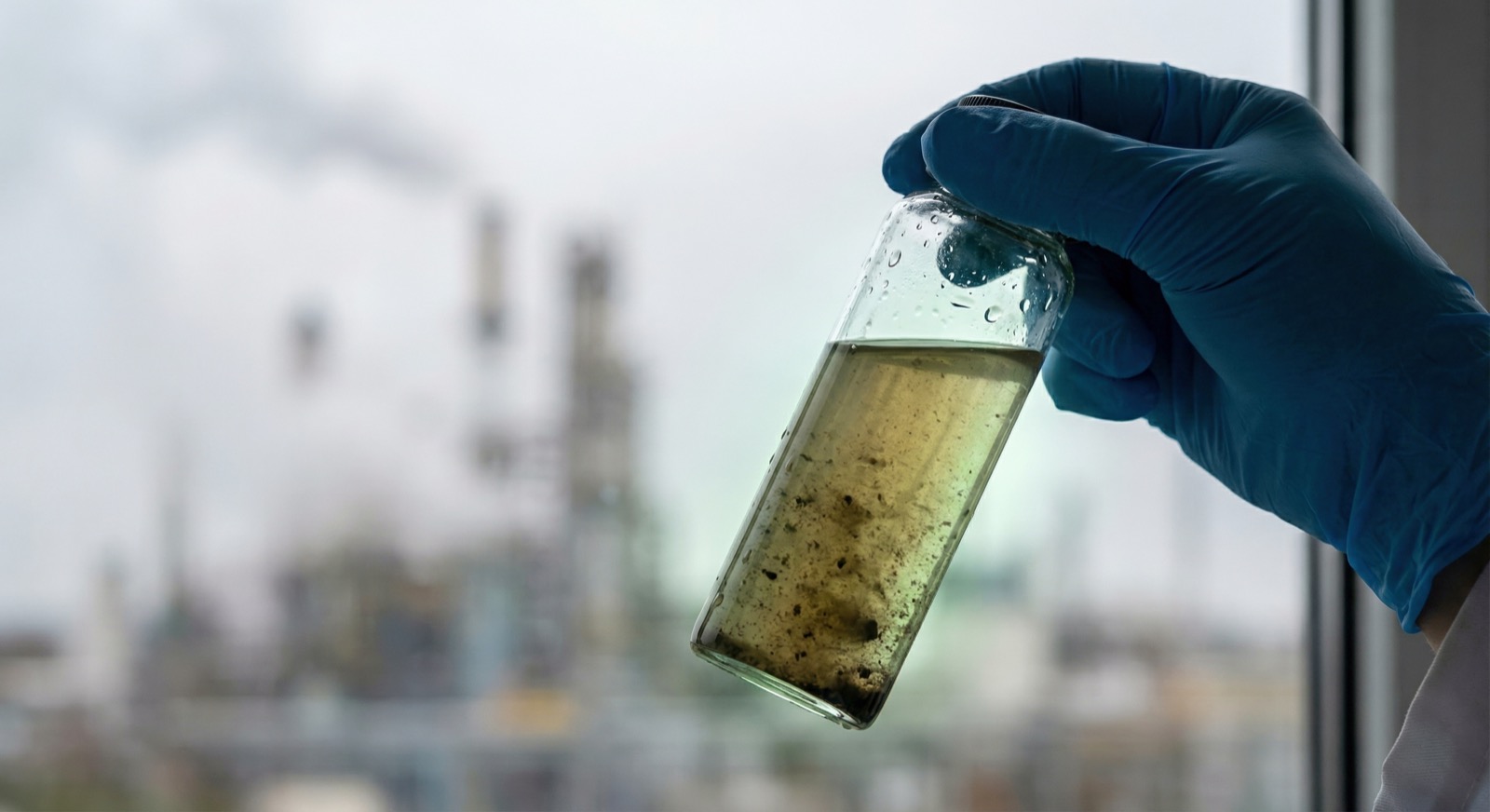
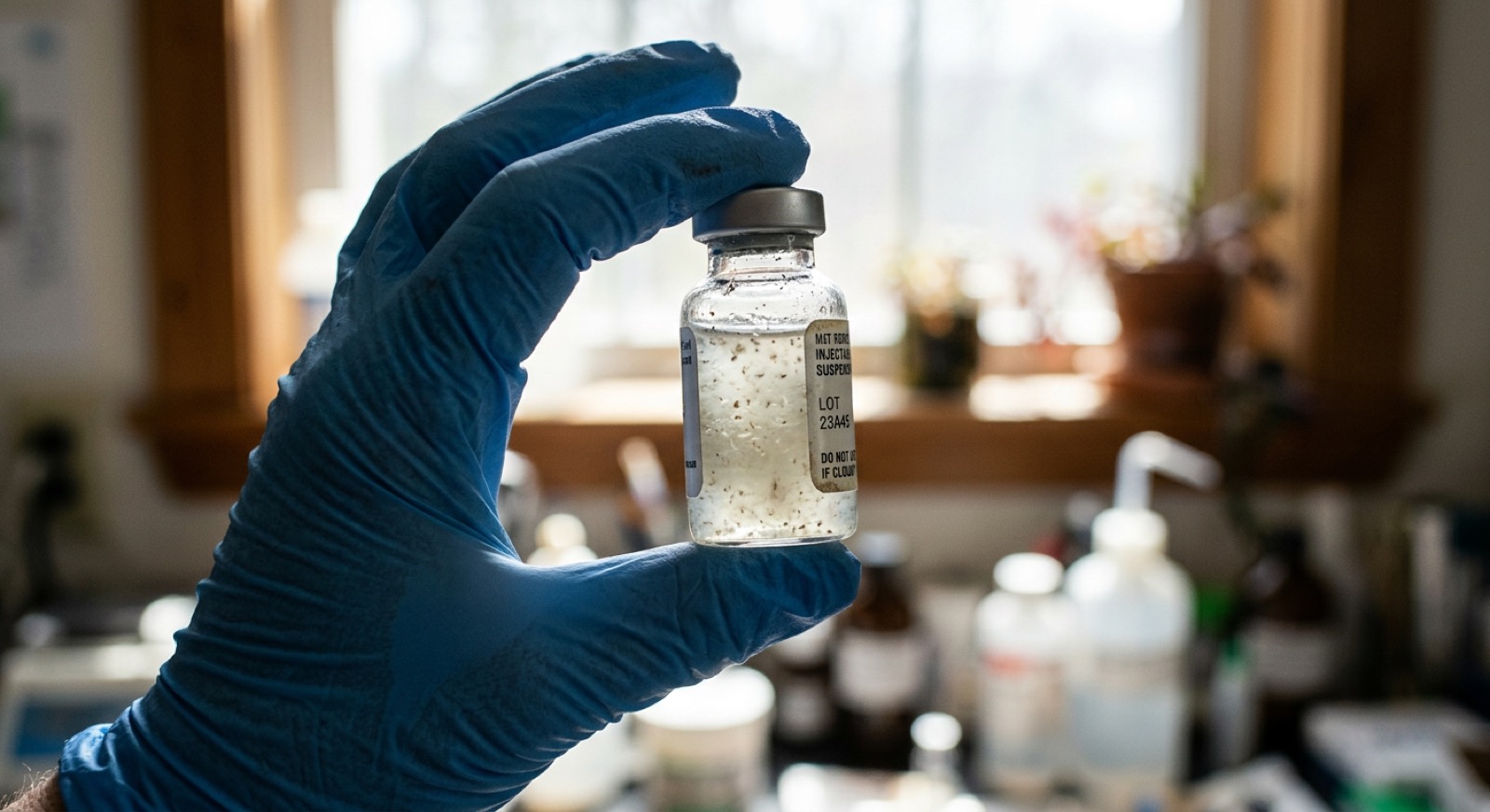
Gloved hand holding a murky, discolored vial up for inspection with a manufacturing facility visible in the background
A vial held up for inspection. Peer-reviewed testing found gray-market semaglutide at 7.7% actual purity vs. 99% labeled.

JMIR Dermatology (2024) purchased semaglutide from online gray-market sellers and submitted samples for independent HPLC analysis. The results were not close.

FDA-Approved (Novo Nordisk)
99%
Gray-Market Label Claim
99%
Sample A (Highest)
14.37%
Sample B (Lowest)
7.7%

Source: JMIR Dermatology, 2024. HPLC purity analysis of semaglutide purchased from online vendors.

Why guess what's in your vial? Get the real thing.

Find Care →

100% Endotoxin Contamination

The same JMIR study tested all purchased samples for bacterial endotoxins -- the cell-wall fragments of gram-negative bacteria that trigger fever, sepsis, and organ failure when injected.

Every single sample tested positive for endotoxin contamination. One hundred percent. This is not a purity problem alone. It is a sterility failure at the most fundamental level.

Syringe filled with cloudy, contaminated liquid with visible particles, the kind of product community harm-reduction guides say to discard
If the solution appears cloudy or contains particulates, the community's own harm-reduction guides say to discard it immediately. Most don't.

Why Endotoxins Matter

Endotoxins are pyrogens -- they cause fever, inflammatory cascades, and septic shock even at microgram levels. They are not destroyed by autoclaving. They pass through standard 0.22μm sterile filters. Removing them requires dedicated depyrogenation steps that gray-market facilities rarely perform.


Novo Nordisk: Up to 86% Impurities

Interior of a pristine pharmaceutical laboratory with controlled lighting and sterile surfaces

Novo Nordisk conducted independent testing of compounded semaglutide products obtained from US pharmacies. Their findings were submitted to the FDA and made public.

86%
Maximum impurity level found in compounded semaglutide samples
100%
Failure rate -- not a single compounded sample met pharmaceutical purity standards
1
Pharmacy whose product contained BPC-157, an unapproved research peptide

Amino acid analysis revealed additions and deletions in the peptide sequence -- the wrong amino acids in the wrong places. These are not inert errors. Missequenced peptides are immunogenic: the body recognizes them as foreign proteins and mounts an immune response, producing anti-drug antibodies that can neutralize both the compounded product and the FDA-approved medication.

BPC-157 Contamination

One pharmacy's semaglutide product contained BPC-157 (Body Protection Compound-157), a research peptide with no FDA approval for any indication. Patients injecting what they believed was semaglutide were unknowingly administering an unapproved substance with no established safety profile in humans.

The Salt Form Problem

Close-up of a pharmaceutical vial with red and yellow caution label under dramatic lighting, a warning sign for contaminated gray-market products

Most compounding pharmacies use semaglutide sodium or tirzepatide sodium as their starting material. The FDA-approved drugs use semaglutide base and tirzepatide base. These are different molecules.

FDA Position

The FDA has stated explicitly that semaglutide sodium and tirzepatide sodium have "not been shown to be safe and effective" and that there is "no legal basis" for compounding them for human use. The salt forms alter the pharmacokinetic profile -- how the drug is absorbed, distributed, and eliminated -- in ways that have never been studied in clinical trials.

This is not a technicality. The salt form changes molecular weight, solubility, stability, and bioavailability. Every clinical trial that established the safety and efficacy of semaglutide and tirzepatide used the base form. The salt form is, from a regulatory and pharmacological perspective, a different drug entirely.

FDA-approved semaglutide is manufactured by Novo Nordisk under pharmaceutical-grade controls. Now available from $149/month.

Find Legitimate Care →
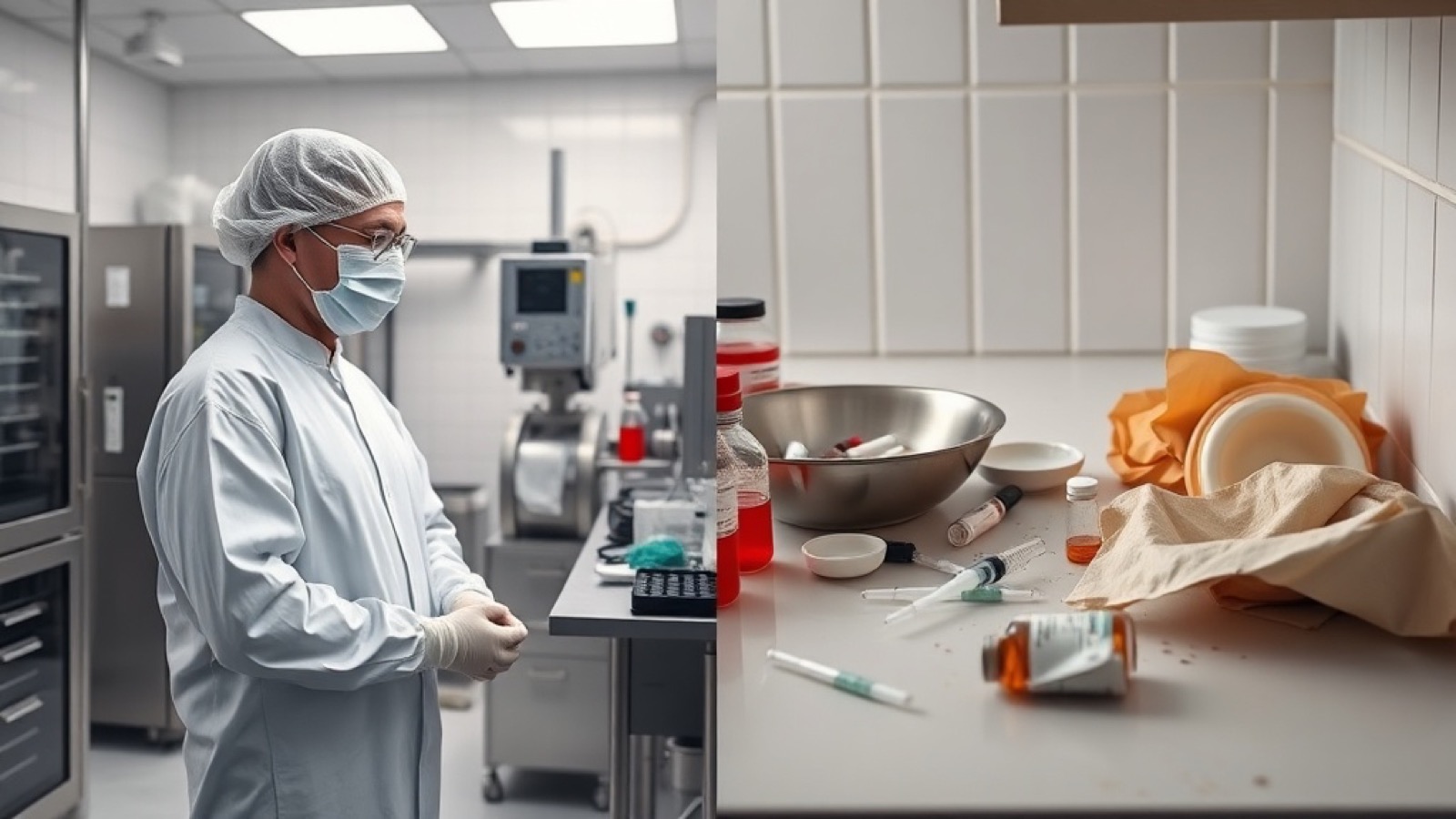
Split image showing a sterile pharmaceutical cleanroom on the left versus a messy kitchen counter with vials on the right — where drugs should be made versus where they actually are

FDA-approved GLP-1s are manufactured in ISO-certified cleanrooms with continuous environmental monitoring. Gray-market peptides are reconstituted on kitchen counters, guided by Reddit threads.

43% of All Peptides Fail Lab Testing

Janoshik Analytical, the most widely used third-party testing lab in the peptide community, published aggregate data from their 2024 testing volume. The numbers are unambiguous.

43%
Of all peptides tested by Janoshik in 2024 failed their own label purity claims
Janoshik Analytical, 2024 aggregate report
±46%
Quantity divergence from label found in Finnrick's 2,446 retatrutide samples
Finnrick Labs, 2024
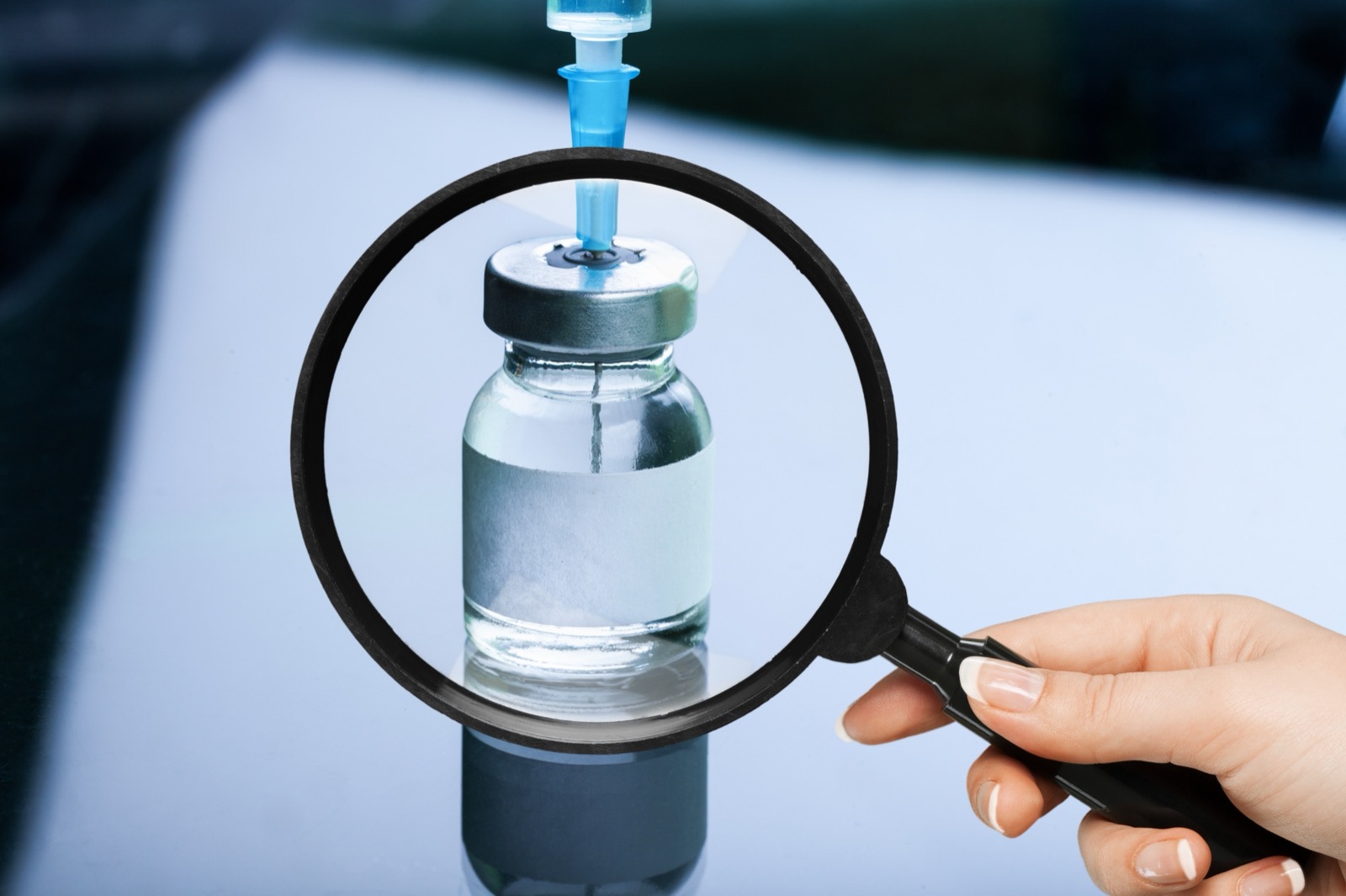
Magnifying glass held up to examine a small pharmaceutical vial, with a syringe resting beside it

Finnrick Retatrutide Study

Finnrick Labs tested 2,446 samples of retatrutide -- a next-generation GLP-1 agonist gaining rapid adoption in gray markets before any FDA approval. Their findings: quantity diverged up to ±46% from label claims, and 10% of samples failed sterility, purity, or dosing thresholds.

A ±46% dosing variance means a patient expecting 5mg could receive anywhere from 2.7mg to 7.3mg. At the high end, this exceeds the dose escalation protocols that clinical trials use to minimize gastrointestinal side effects. At the low end, the patient is undertreated and may conclude the medication does not work.

Specific Vendor Failures

Kennett Square, PA Facility

Shipped semaglutide at 79.9% labeled potency. Separately distributed tirzepatide that had failed sterility testing. In both cases, zero patient notification was issued. Patients injected sub-potent and potentially contaminated product without knowledge.

Coastal Peptides: Wrong Peptide Entirely

Sold vials labeled as semaglutide that actually contained cagrilintide -- a completely different peptide with different receptor binding, different pharmacokinetics, and different side effect profiles. Customers had no way to know without third-party testing.

Modern Peptides: Forged Lab Reports

Distributed Certificates of Analysis (COAs) bearing the Janoshik Analytical name and logo that Janoshik confirmed were fabricated. Customers who trusted the COA as proof of quality were relying on a forged document.

Counterfeit Ozempic: Insulin Glargine

Counterfeit Ozempic pens entered the US supply chain containing insulin glargine instead of semaglutide. Three patients were hospitalized for hypoglycemia -- dangerously low blood sugar caused by an insulin they did not know they were injecting.

When users actually send samples to a lab, here’s what comes back.

The 7.7% purity figure isn’t a one-off outlier. It’s the visible end of a pattern documented across multiple independent testing operations and peer-reviewed studies.

43% of peptides tested by Janoshik Analytical in 2024 failed to meet their label purity claims. Lower-tier vendors averaged 71–91% actual against advertised 99%+. Janoshik Analytical 2024 aggregate, Peptide Protocol Wiki review

73% of 1,200+ samples tested by ACS Peptide Labs (2024–2026) showed purity discrepancies versus the supplier’s COA. Average shortfall: 8.4 percentage points below claimed. 41% of samples were off by more than 10 points. ACS Peptide Labs 2024–2026 dataset

34% of repeat customers find different purities batch-to-batch from the same vendor. The vial that worked last month isn’t the same molecule you’re injecting today. ACS Peptide Labs repeat-customer data

±45% quantity variance from advertised vial amounts is the normal range across 6,937 samples in the Finnrick Analytics database (205 vendors, 15 peptides, Dec 2024 – Apr 2026). A vial labeled “5mg semaglutide” routinely contains anywhere from 2.75mg to 7.25mg. Finnrick Analytics 2024–2026, finnrick.com

Most gray-market buyers never send a sample to a lab.

The community talks about “testing every batch” like it’s the standard. The data says otherwise.

The cost barrier most users won’t pay

Independent testing runs $50–$300 per sample depending on the lab and panel. A full Janoshik blind GLP-1 test is $828. For a user spending $40 on a vial of “sema,” sending it off costs more than the product itself. So they don’t.

Janoshik, MZ Biolabs, Chromate published pricing

“I didn’t test it. Someone else did.”

The most common pattern on glp1forum.com isn’t personal testing. It’s users relying on a screenshot of someone else’s result from a different batch, weeks or months earlier. One forum quote: “I didn’t [test]. Used for a couple of weeks first.” Single-vial vendors make personal testing structurally impossible — you’d be sacrificing your only vial.

glp1forum.com vendor & testing threads

Janoshik’s own founder reports

Of products submitted to Janoshik for testing — a sample biased toward users who care enough to test — roughly 5% test as the wrong compound or degraded entirely and another 3–5% fail sterility. The unbiased market rate is almost certainly higher.

Specific vendors caught selling something other than what the label says.

Coastal Peptides — “semaglutide” was actually cagrilintide

Samples sold as semaglutide tested as cagrilintide — a different peptide entirely, with different mechanism, different dosing, different safety profile. Confirmed by three independent labs (Janoshik, MZ Biolabs, TrustPointe). Anyone dosing “sema” from this vendor was injecting an amylin analog without knowing it.

Peptide Protocol Wiki, Janoshik Analytical Review

Tier-4 vendor — molecular weight 2,847 Da vs. expected 4,113 Da

One vendor’s “semaglutide” came back with a molecular weight of 2,847 daltons. Real semaglutide is 4,113 daltons. The reviewing chemist’s assessment: “not semaglutide at any purity level.” An entirely different molecule, sold under semaglutide’s name.

Peptide Protocol Wiki, mass-spec analysis

ERP / Endurance Performance Research — underfilled and over-endotoxin

SS31 vials labeled 50mg actually contained 44.10mg (11.8% short). Endotoxin tested at 26.79 EU/vial — above the lab’s validated reporting range, meaning the actual level was higher than the test could measure. The company offered “future credits” instead of refunds and banned customers who reported issues publicly.

glp1forum.com testing threads, Graymarket Substack investigation

PSL / Peptide Sciences — primobolan that was actually testosterone propionate

A premium-priced primo-E product tested as testosterone propionate — a much cheaper compound. The community-vouched “gold standard” selling a different drug at a markup. Peptide Sciences shut down March 2026 after a federal raid.

Peptide Protocol Wiki, Janoshik Analytical aggregate

Three illegal online pharmacies, tested in a 2024 multifactor quality analysis. None passed.

A peer-reviewed study (PMC 11582493) bought semaglutide from three illegal online pharmacies marketed to consumers and ran complete pharmaceutical analysis. The labels claimed 99% purity. Here’s what was actually in the vials.

Vendor Claimed Purity Actual Purity Excess Active Endotoxin (EU/mg) Quality Criteria Met
SemaSpace 99% 14.37% +28.56% to +38.69% 8.95 9 / 22 (41%)
USChemLabs 99% 8.97% +28.56% to +38.69% <2.16 8 / 22 (36%)
BiotechPeptides 99% 7.7% +28.56% to +38.69% <2.87 8 / 22 (36%)

Two things to absorb from that table. First: every vendor measured at less than 15% actual purity against a 99% claim. Second: every vendor also overdosed the labeled active by 28–39% — meaning users who titrated dosing based on the label were getting a wildly inaccurate amount, in either direction. Endotoxin (bacterial cell-wall fragments that cause septic shock and injection-site reactions) was present in all three.

Source: Multifactor quality analysis of semaglutide from illegal online pharmacies, PMC 11582493 (2024)

The bonus finding: 50% of the test purchases (3 of 6 vendors approached) turned out to be straight nondelivery scams. Fake courier companies demanded $650–$1,200 in “customs fees” before product shipment, then disappeared with the money. Buyers who avoid the contamination still lose to fraud at a measurable rate.

Methodology & Sources

This page aggregates purity data from peer-reviewed research, FDA enforcement records, manufacturer testing reports, and independent analytical laboratories. Primary sources include:

  • JMIR Dermatology (2024) -- HPLC purity and endotoxin analysis of online semaglutide purchases
  • Multifactor quality analysis of semaglutide from illegal online pharmacies, PMC 11582493 (2024)
  • Novo Nordisk testing data submitted to FDA -- amino acid sequencing and impurity analysis of compounded semaglutide
  • FDA warning letters, Form 483 observations, and recall notices for compounding pharmacies
  • Janoshik Analytical 2024 aggregate testing data and Peptide Protocol Wiki review
  • Finnrick Analytics testing database — 6,937 samples, 205 vendors, 15 peptides (Dec 2024 – Apr 2026)
  • ACS Peptide Labs 2024–2026 batch-discrepancy data (1,200+ samples)
  • FDA statements on semaglutide sodium / tirzepatide sodium salt forms
  • glp1forum.com vendor warning threads, Graymarket Substack investigations

Know Your Vial has no financial relationship with Novo Nordisk, Eli Lilly, or any pharmaceutical manufacturer. We do not sell peptides, supplements, or testing services.

Find Legitimate Care →